
Competitor Analysis for SEO: Build a Winning Strategy
Introduction
If your competitors consistently rank above you on Google, there’s usually a reason behind it.
They may have stronger backlinks, better keyword targeting, more optimized content, or a technically healthier website. The good news is you don’t have to guess what’s working for them. A proper competitor analysis for SEO helps you uncover those opportunities and turn them into a practical growth strategy.
Over the years, one thing has become very clear in SEO businesses that analyze competitors strategically make smarter decisions faster. Instead of wasting months testing random tactics, they focus on what already works in their industry.
A strong competitor analysis strategy usually works even better when combined with professional technical SEO services and a detailed, complete SEO audit to identify hidden ranking limitations.
Whether you run a local business, agency, SaaS company, or personal brand, competitor SEO research can reveal:
- Which keywords drive traffic
- Where competitors earn backlinks
- What content performs best
- Which pages generate conversions
- Technical weaknesses you can outperform
This guide breaks down how professional SEO competitor analysis works, why it matters, and how it helps businesses gain long-term search visibility.
What Is Competitor Analysis for SEO?
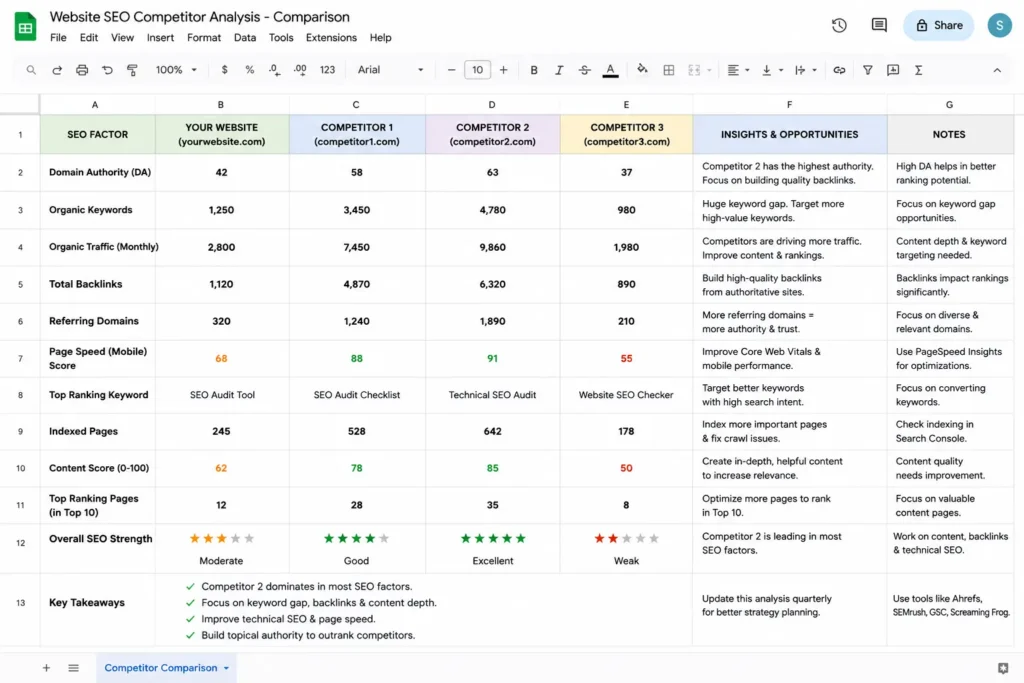
Competitor analysis for SEO is the process of evaluating competing websites to understand their search engine strategies, keyword rankings, backlinks, content performance, and technical SEO strengths.
The goal is simple:
Identify what helps competitors rank, then build a smarter strategy that performs even better.
A complete SEO competitor analysis usually includes:
- SEO keyword gap analysis
- Competitor backlink analysis
- Technical SEO review
- Content performance evaluation
- Website authority comparison
- SERP positioning analysis
Businesses that skip competitor analysis often rely on assumptions. Businesses that use data-driven SEO insights typically make faster ranking improvements with fewer wasted resources.
For deeper technical guidance, many SEO professionals also follow Google Search documentation to understand how Google evaluates websites.
Why SEO Competitor Analysis Matters
SEO is competitive by nature. Google compares your website against others before deciding rankings.
That means understanding competitors is no longer optional.
Key Benefits of Website SEO Competitor Analysis
Discover High-Value Keywords
Competitor keyword analysis reveals search terms already driving qualified traffic in your niche.
This helps you target keywords with proven search demand instead of guessing.
A well-planned keyword research strategy can uncover long-tail opportunities, buyer-intent keywords, and untapped traffic sources.
Identify Backlink Opportunities
A competitor’s backlink analysis shows where competing websites earn authority links.
In many industries, backlink gaps are one of the biggest ranking differences.
Studying competitor backlinks can also improve your authority link-building strategy and help uncover high-quality outreach opportunities.
For advanced backlink analysis, many SEO teams draw on insights from the Ahrefs Blog.
Improve Content Strategy
Analyzing top-performing competitor pages helps uncover:
- Content depth
- Search intent coverage
- Topic clusters
- Semantic keyword usage
- User engagement strategies
A strong semantic SEO strategy helps search engines better understand topical relevance and content relationships.
Find Technical SEO Weaknesses
Sometimes competitors rank because their websites are technically stronger.
A website competitor analysis can uncover issues like:
- Slow page speed
- Poor indexing
- Weak internal linking
- Crawlability problems
- Mobile usability gaps
Optimizing Core Web Vitals and overall technical SEO can significantly improve search visibility.
You can also use PageSpeed Insights for accurate website performance testing and speed analysis.
Gain Competitive Advantage Faster
Instead of starting from zero, you learn from proven ranking patterns already working in your market.
Why Many Businesses Fail to Rank Even After Publishing SEO Content
One of the biggest misconceptions in SEO is believing that simply publishing content will automatically improve rankings.
In reality, many websites struggle because they lack a clear competitive SEO strategy.
After analyzing competitor websites across different industries, several recurring issues appear:
- Targeting keywords without proper search intent analysis
- Publishing thin or outdated content
- Weak internal linking structure
- Poor topical authority
- Missing semantic keyword coverage
- Low-quality backlink profiles
- Ignoring technical SEO issues
- Failing to analyze competitor strengths
This is exactly why competitor analysis for SEO matters.
Instead of relying on assumptions, businesses that use data-driven SEO insights often achieve faster and more sustainable ranking growth.
Types of SEO Competitor Analysis
1. Competitor Keyword Analysis
This process identifies keywords that competitors rank for that your website currently misses.
A strong keyword gap analysis often uncovers:
- Low-competition opportunities
- Buyer-intent keywords
- Long-tail traffic opportunities
- Commercial search terms
- Content expansion ideas
Many businesses improve rankings faster when combining competitor research with advanced on-page SEO optimization and content planning.
Example
If a competitor ranks for:
- “best CRM software for agencies”
- “affordable CRM for small business”
But your website doesn’t target those terms, you’re missing valuable organic traffic.
For advanced SEO keyword gap analysis tools, many professionals use Semrush SEO Toolkit.
2. Competitor Backlink Analysis for SEO
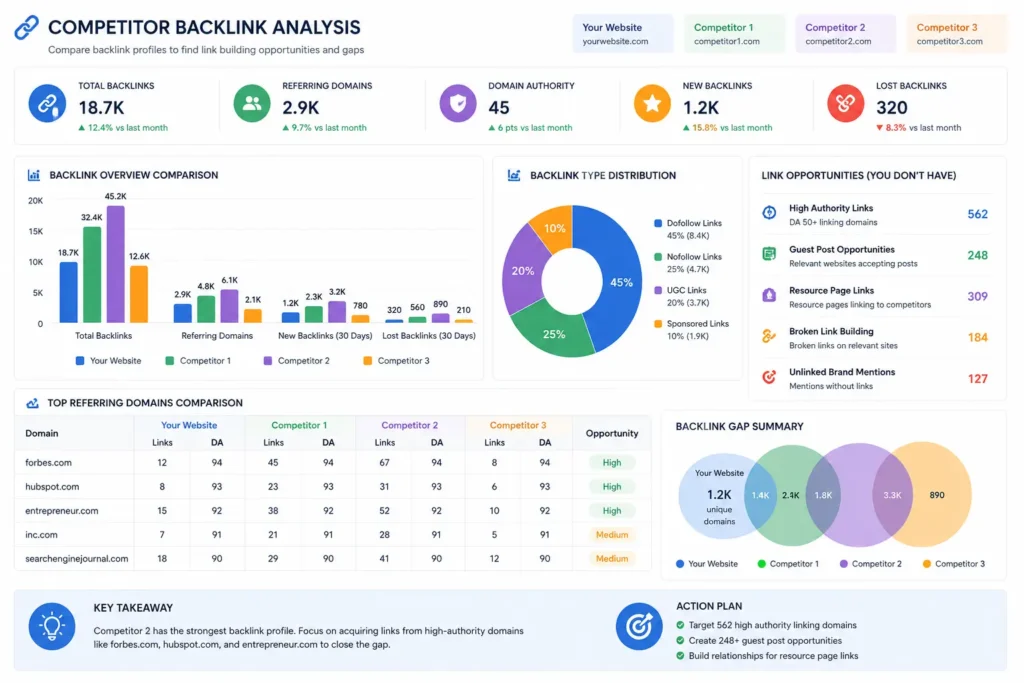
Backlinks remain one of Google’s strongest ranking signals.
A competitor backlink analysis helps identify:
- High-authority linking domains
- Guest posting opportunities
- Industry citations
- PR opportunities
- Resource page links
In real-world SEO campaigns, backlink gap analysis often reveals why two similar websites rank very differently.
Businesses investing in a long-term backlink building strategy often see stronger domain authority growth over time.
3. Website SEO Competitor Analysis
This involves reviewing the technical and structural strengths of competing websites.
| Headings, metadata, and content structure | What Gets Reviewed |
| Technical SEO | Crawlability, indexing, Core Web Vitals |
| On-Page SEO | Headings, metadata, content structure |
| Internal Linking | Topic relevance and authority flow |
| UX Signals | Navigation, mobile usability, engagement |
| Content Quality | Depth, freshness, semantic relevance |
How Professional Competitor Analysis Works
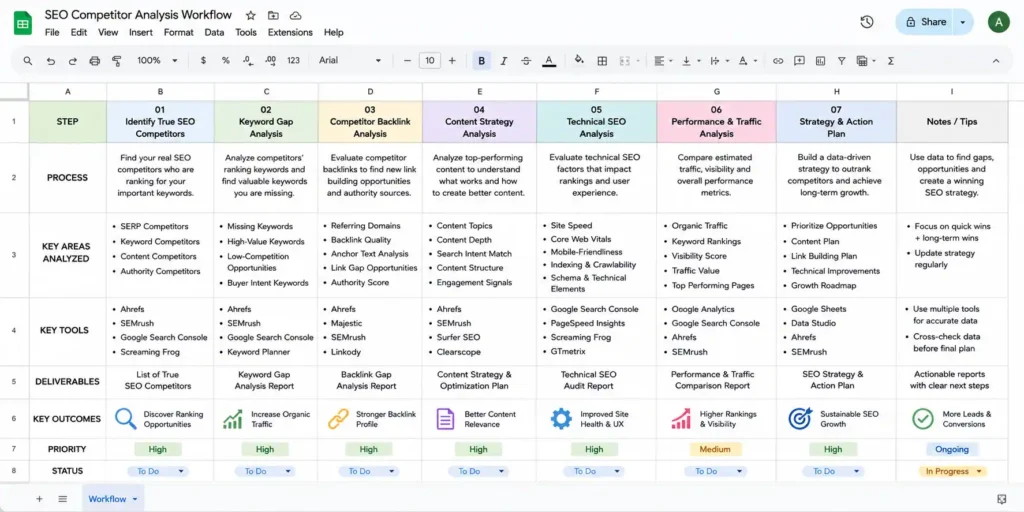
Step 1: Identify True SEO Competitors
Your SEO competitors may not always match your business competitors.
For example, a small local company may compete against blogs, directories, SaaS tools, or media websites in Google search results.
A proper analysis focuses on:
- SERP competitors
- Keyword competitors
- Content competitors
- Authority competitors
Step 2: Perform SEO Keyword Gap Analysis
This stage compares ranking keywords between websites.
The goal is to uncover:
- Missing content opportunities
- Underperforming pages
- High-conversion keywords
- Easy ranking wins
Professional SEO teams often prioritize keywords based on:
- Search intent
- Difficulty
- Revenue potential
- Traffic value
Many successful campaigns also combine competitor research with a strong content optimization process to improve rankings faster.
Step 3: Analyze Competitor Content Strategy
Not all content ranks because it’s longer.
Often, the highest-performing content succeeds because it:
- Matches search intent
- Covers entities comprehensively
- Answers user questions clearly
- Improves readability
- Builds topical authority
A quality content audit examines:
- Heading structure
- NLP keyword relevance
- Semantic coverage
- User experience
- Engagement signals
Using reliable Google Search Console data can also help identify content opportunities and performance gaps.
Step 4: Review Competitor Backlinks
The backlink profile tells a major part of the ranking story.
Professional analysis evaluates:
- Domain authority
- Link quality
- Anchor text distribution
- Referring domains
- Link acquisition trends
Step 5: Evaluate Technical SEO Performance
Technical SEO issues can quietly limit rankings.
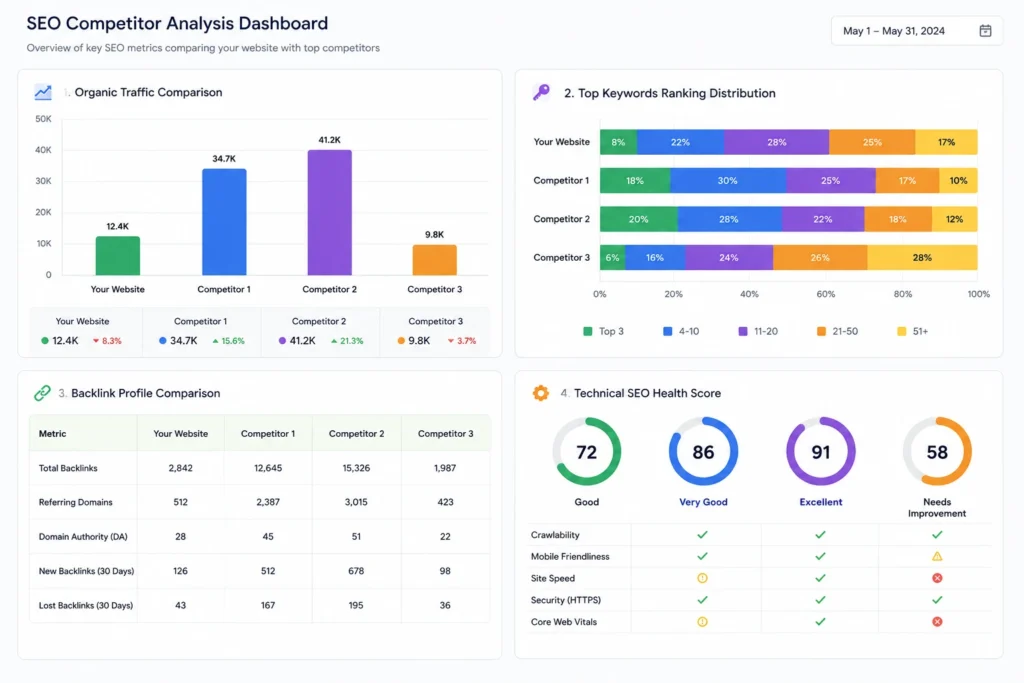
Common competitor comparisons include:
- Core Web Vitals
- Mobile performance
- Page speed
- Indexation
- Schema markup
- Crawl depth
Businesses looking for long-term growth often invest in website speed optimization and advanced technical SEO strategies to improve performance.
Real-World Example
A local service business struggled to rank for competitive commercial keywords.
After conducting a website competitor analysis, several issues became obvious:
- Competitors had stronger service-page content
- Their internal linking structure was weak
- They lacked location-focused backlinks
- Competitors targeted long-tail keywords more effectively
After implementing:
- SEO keyword gap analysis
- Content optimization
- Internal linking improvements
- Competitor backlink outreach
The business started seeing ranking growth within a few months and significantly improved organic leads.
This type of improvement is common when SEO decisions are based on real competitive data instead of assumptions.
Common Mistakes Businesses Make
Copying Competitors Blindly
Good SEO is not about cloning another website.
The goal is to identify opportunities and create something more valuable.
Ignoring Search Intent
Many websites focus only on keywords while ignoring what users actually want.
Google increasingly rewards intent satisfaction and user experience.
Focusing Only on Backlinks
Links matter, but modern SEO also depends heavily on:
- Content quality
- UX
- Technical SEO
- Semantic relevance
- Brand trust
Using Outdated SEO Tactics
Some competitor strategies may already be outdated or risky.
Modern SEO should prioritize sustainable, white-hat growth strategies.
Why Choose Our Competitor Analysis Service?
A proper SEO competitor analysis should do more than generate reports.
It should uncover actionable growth opportunities that directly improve rankings, traffic, and conversions.
What Makes Our Approach Different
Data-Driven SEO Strategy
Every recommendation is based on real competitor data, search intent, and ranking patterns — not generic SEO assumptions.
Advanced Keyword Gap Analysis
We identify high-value keyword opportunities your competitors already rank for, but your website currently misses.
Competitor Backlink Intelligence
Our analysis uncovers backlink opportunities that can strengthen your website’s authority naturally.
Technical SEO Insights
We evaluate the technical strengths and weaknesses affecting search visibility, crawlability, indexing, and Core Web Vitals.
Content & Topical Authority Analysis
We analyze how competitors structure content, build topic relevance, and improve semantic SEO coverage.
Conversion-Focused Recommendations
Ranking alone is not enough. We focus on strategies that help increase leads, inquiries, and long-term business growth.
What You’ll Receive
When you invest in a professional website SEO competitor analysis, you receive:
- Complete SEO competitor audit
- Competitor keyword analysis report
- SEO keyword gap analysis
- Competitor backlink analysis
- Technical SEO comparison
- Content strategy recommendations
- Topical authority opportunities
- Internal linking recommendations
- SEO growth roadmap
- Actionable next-step strategy
Who Needs Competitor Analysis for SEO?
Competitor analysis benefits almost every industry, including:
- Local businesses
- Agencies
- SaaS companies
- E-commerce brands
- Freelancers
- Enterprise websites
- Affiliate publishers
- Healthcare businesses
If your competitors rank higher than you, competitor SEO research becomes essential.
FAQs
What is competitor analysis in SEO?
Competitor analysis in SEO is the process of studying competing websites to understand their keywords, backlinks, content strategy, and technical SEO performance.
Why is competitor keyword analysis important?
It helps identify valuable keywords competitors rank for, so you can uncover traffic opportunities and content gaps.
How does competitor backlink analysis help rankings?
It reveals where competitors earn authority links, helping businesses discover new link-building opportunities.
What tools are commonly used for SEO competitor analysis?
Popular tools include Ahrefs, Semrush, Google Search Console, and Screaming Frog SEO Spider.
How often should competitor analysis be done?
Most businesses should review SEO competitors quarterly, though competitive industries may require monthly analysis.
CTA Section
Want to Outrank Your Competitors?
A professional competitor analysis for SEO can uncover the exact opportunities your competitors already use to generate rankings, traffic, and leads.
Whether you need:
- SEO keyword gap analysis
- Competitor backlink analysis
- Technical SEO competitor audits
- Content strategy insights
A data-driven SEO strategy can help you grow faster with less guesswork.
Businesses looking for sustainable growth often start with a professional SEO services consultation to uncover hidden ranking opportunities and build a long-term strategy.
Get a Professional SEO Competitor Analysis Today
Discover the gaps, weaknesses, and ranking opportunities hiding in your market.
You can also book an SEO consultation to discuss your website goals, competitor landscape, and SEO growth opportunities with an experienced SEO specialist.